

AI is starting to become genuinely useful on the tools. For tradesmen, it's no longer just about chatbots or gimmicks. The best AI assistants now hel
AI is starting to become genuinely useful on the tools. For tradesmen, it’s no longer just about chatbots or gimmicks. The best AI assistants now help with three real-world problems:
- solving technical issues faster
- reducing paperwork
- getting remote support without stopping the job
AI Apps and platforms such as Super Engineer, Zuper, RealWear and emerging AI glasses products show how AI is moving from the office into the van, plant room and site cabin.
1. Technical AI assistants: faster fault-finding and troubleshooting
One of the most valuable use cases is technical assistance. Instead of searching forums, digging through PDFs, or calling a senior engineer, a technician can ask an AI assistant a practical question in plain English and get a concise answer on the spot.
Super Engineer, for example, positions itself as an AI assistant for service technicians and engineers, focused on helping tradesmen get technical answers quickly. Its manufacturer-facing pages also describe custom knowledge features, where teams can upload manuals, fix notes and internal know-how so answers are grounded in company-specific information.
This category is particularly useful for engineers working across multiple brands or older equipment. Good technical AI can reduce time spent hunting for manuals, improve first-time fix rates, and help junior engineers become productive faster.
The main limitation is that the quality of answers depends heavily on the quality of the underlying data and how well the assistant is tuned for real field use. This is where you see quality differences between apps like Super Engineer and Trade Hog – where Trade Hog’s AI is comparatively weak compared to the accuracy of Super Engineer.
2. AI inside field service software: less admin, faster paperwork
A second category is AI built into field service management software. Here, the focus is less on technical diagnosis and more on workflow: job notes, scheduling, dispatch, invoicing and customer communication. Zuper’s AI pages highlight hands-free voice notes, automatic transcription and cleanup, photo-plus-voice job records, AI-powered dispatching, and automated invoicing.
Other FSM platforms are moving the same way. Jobber says its AI helps from “first call to final payment,” and its AI Receptionist is designed to answer calls and texts and even book jobs. ServiceTitan has also been rolling out AI and automation features, including Atlas and AI-backed dispatching and workflow tools.
For many trades businesses this is where AI delivers the quickest operational win. Admin is a major drain on margins, especially for small and mid-sized service firms. If AI can turn spoken updates into clean job notes, chase customer comms automatically, and improve dispatch decisions, it saves time without changing how engineers actually work on site.
3. AI glasses and remote assist: hands-free support on site
The third category is wearable AI and remote assistance. RealWear’s smart glasses are built for frontline workers and emphasise hands-free, voice-powered working, safety and remote collaboration. RealWear also highlights integration with tools such as Zoom for frontline support and remote expert guidance.
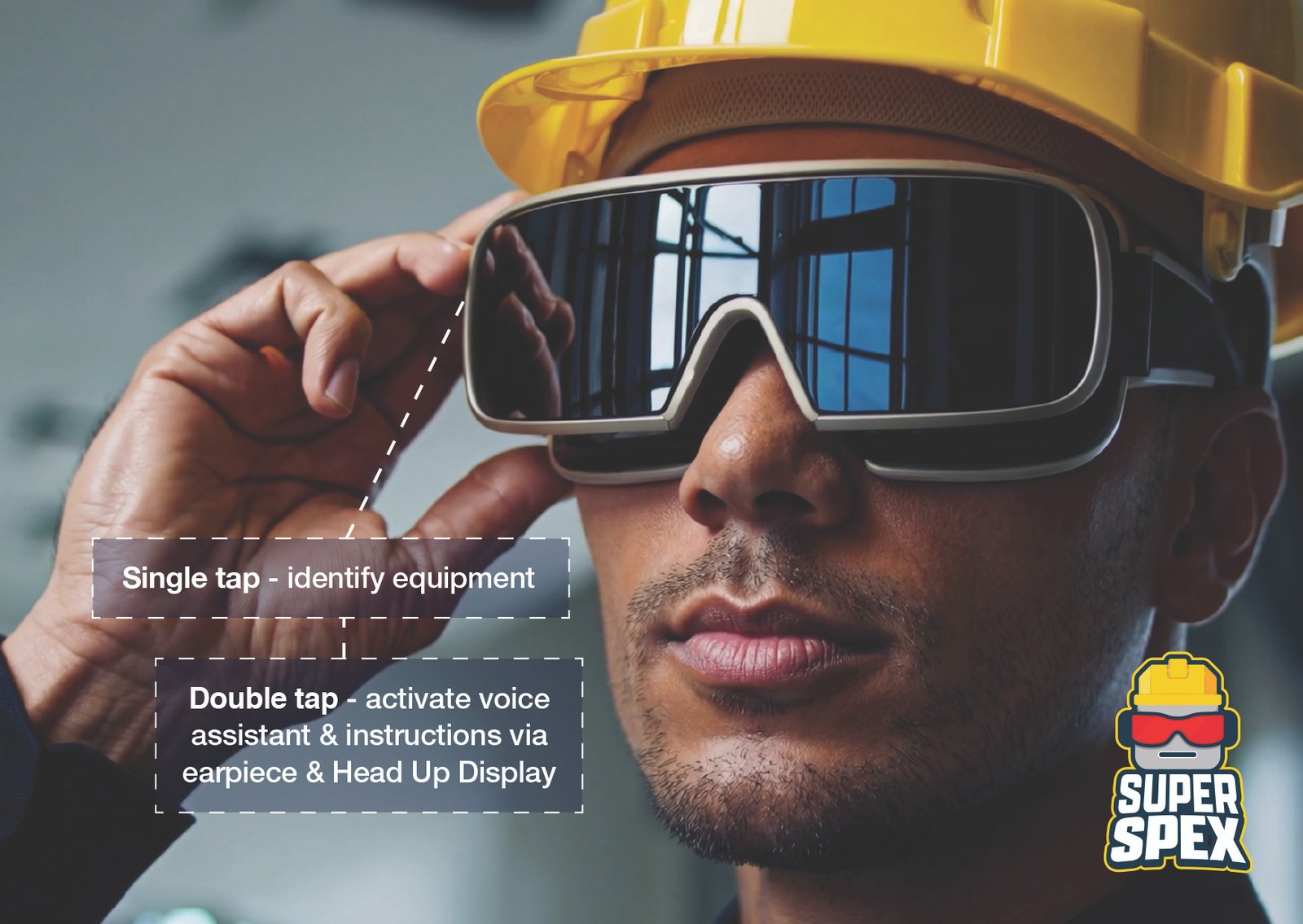
Super Spex is an emerging example aimed more directly at tradespeople. Super Engineer describes it as AI-powered glasses with voice or tap controls, audio guidance, and a head-up display for hands-free assistance.
This category will appeal most where engineers need both hands free, need to share what they are seeing with HQ, or want instructions delivered without constantly taking out a phone. The downside is that smart glasses are a bigger behavioural and hardware shift than an app, so adoption may be slower unless the value is obvious.
Tradesman AI comparison
The best AI assistant for tradesmen depends on the problem you are trying to solve. If the pain point is diagnosis, choose a technical assistant. If the pain point is admin, choose AI-enabled field service software. If the pain point is remote support and hands-free working, look at smart glasses. In practice, the long-term winners may be the platforms that combine all three.
| Category | Example technical AI assistants | Best for | Pros | Cons |
| Technical AI assistant | Super Engineer, Tradehog | Fault-finding, manuals, technical Q&A | Fast answers in the field; can use specialist knowledge; helps junior engineers ramp up quicker | Depends on data quality; may need sector-specific tuning |
| AI field service software | Zuper, Jobber, ServiceTitan | Job notes, dispatch, scheduling, customer comms, invoicing | Strong operational ROI; reduces paperwork; fits existing workflows | Usually not deep technical support; can be expensive or process-heavy to implement |
| AI smart glasses / remote assist | RealWear, Super Spex | Hands-free working, remote expert help, live visual guidance | Great for complex jobs; ideal when both hands are busy; supports HQ collaboration | Hardware cost; user adoption can be slower; may not suit every trade or job type |
How to choose the best technical AI assistant
Looking at AI for your trade business? Start by mapping your biggest bottleneck: diagnosis, paperwork or remote support. That usually tells you which category of AI assistant will deliver value first.